
Hair loss and alopecia: causes and which doctor to see
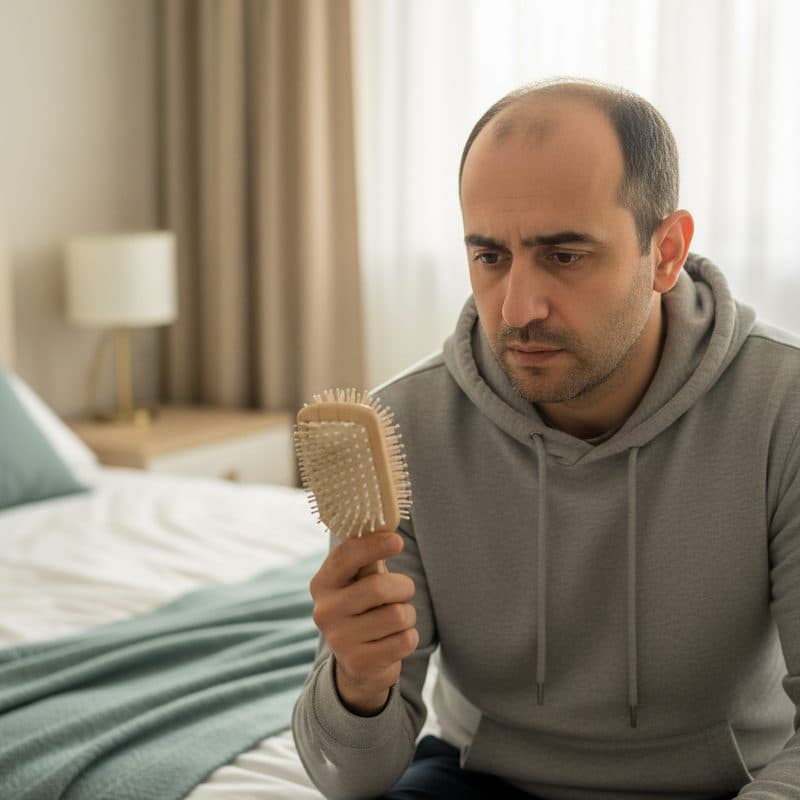
Losing up to a hundred hairs a day is normal. But if your hair is visibly thinning, bald patches appear or hair falls out in clumps, look for the cause with a dermatologist: from iron deficiency to hormonal imbalances.
Common causes
- Stress and recent illness — shedding starts 2–3 months later
- Iron, protein or vitamin D deficiency
- Thyroid disorders
- Hormonal changes — after childbirth, menopause
- Hereditary hair loss (androgenetic alopecia)
- Tight hairstyles and harsh treatments
When to seek urgent help
Do not wait for a scheduled visit if you have any of these signs:
- Patchy loss — smooth bald spots
- Hair loss with itching, flaking or redness of the scalp
- Hair loss with brittle nails, weakness, shortness of breath
- Hair loss after starting a new medicine
- Hair loss in a child
Ambulance: 103 (103 from a mobile) · Unified rescue service: 911
Your specialist
Dermatologist
What to bring to the visit
- Photos showing how hair density has changed
- Blood test results (ferritin, TSH), if you have them
- A list of medicines and diets over the past six months
- Information about hair loss in your parents
Frequently asked questions
What causes hair loss?
Most often: recent stress, an illness with a high fever, childbirth or rapid weight loss (hair starts shedding 2–3 months later), low iron, thyroid disorders and heredity. Less often the cause is alopecia areata, a fungal scalp infection, tight hairstyles or medicines. A dermatologist will help find the cause: an examination and, if needed, blood tests — for example, ferritin (iron stores) and thyroid hormones.
What is alopecia and what types are there?
Alopecia is the medical term for hair loss and baldness. The most common type is androgenetic (hereditary) alopecia: in men it starts with a receding hairline or thinning on the crown, in women with overall thinning and a widening part. There are also alopecia areata (round or oval bald patches) and telogen effluvium, or diffuse hair loss, when hair thins evenly after stress, illness or childbirth; a dermatologist determines the type.
Alopecia areata (patchy hair loss): which doctor?
A dermatologist, and do not put off the visit: round, smooth bald patches on the scalp, in the beard or elsewhere need to be told apart from a fungal scalp infection and other causes. Alopecia areata most often starts in children and young adults; for a child, start with a pediatrician or a pediatric dermatologist.
Hair loss in women: dermatologist or endocrinologist?
Start with a dermatologist: they will examine your scalp and decide which tests are needed. An endocrinologist or gynecologist may be needed if hair loss comes with irregular periods, acne or excess hair growth on the face and body, or if tests show a thyroid problem. Hair shedding a few months after childbirth is common and usually temporary, with fullness returning within 6–9 months; if the thinning does not settle, see a doctor.
Trichologist or dermatologist?
A trichologist is usually a dermatologist who focuses on hair and the scalp. Start with a dermatologist: they will examine you and order tests if needed.
Will pharmacy vitamins help?
Taking supplements "blindly" rarely works: first tests, then correcting specific deficiencies as prescribed by the doctor.
More in “Skin and hair”
- Acne
Dermatologist
The information on this page is for reference only and does not replace a doctor's consultation. Only a doctor can make a diagnosis in person. If your condition worsens, call 103.