
Rash in a child: allergy, chickenpox and other causes — when to see a doctor
Rashes are common in children: from heat rash and allergies to viral infections. Most rashes are harmless, but it is worth showing the child to a pediatrician — especially if the rash comes with fever.
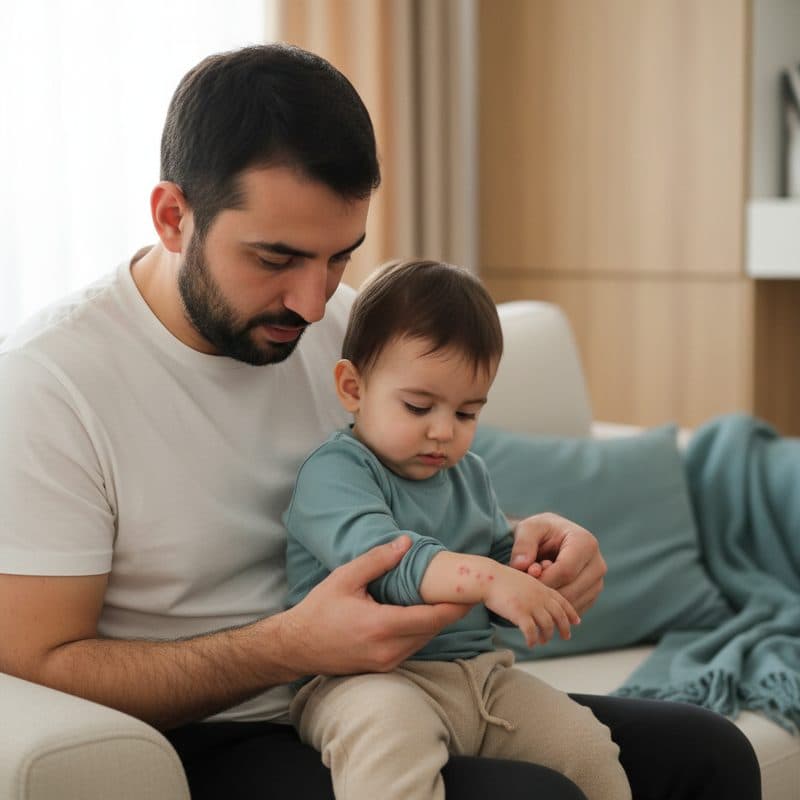
Common causes
- Heat rash and diaper irritation
- Allergy to food, medicines, care products
- Viral infections, including chickenpox and roseola
- Atopic dermatitis — dry, itchy skin
- Insect bites
When to seek urgent help
Do not wait for a scheduled visit if you have any of these signs:
- A rash that does not fade under pressure (check with a clear glass) — call 103
- A rash with swelling of the lips or tongue, or trouble breathing — call 103
- A rash with high fever and listlessness
- Blisters, weeping skin, quickly spreading patches
- Any rash in a baby under 3 months
Ambulance: 103 (103 from a mobile) · Unified rescue service: 911
Your specialist
Pediatrician
What to bring to the visit
- Photos of the rash over time: when it appeared, how it changed
- A list of new foods, medicines and care products from recent days
- The vaccination record
- Information about allergies in the family
Frequently asked questions
Allergic or viral rash: how can I tell?
Only a doctor can reliably tell them apart on examination. Tell the pediatrician whether anything new came before the rash — a food, a medicine, a care product — and whether there was a fever, a runny nose or contact with sick people. Itchy raised welts (hives) can come with both allergies and infections; if the lips or tongue swell or breathing is difficult, call 103 right away.
Small red spots all over a child's body: what could it be?
Such a rash can come with viral infections, allergies or heat rash — the pediatrician will find the cause on examination. First press a clear glass against the rash: if the spots do not fade, call 103 right away. If they fade and the child is lively, see the pediatrician; with a high fever and listlessness, or in a baby under 3 months, seek help urgently.
Chickenpox in a child: pediatrician or infectious disease specialist?
Start with the pediatrician, who will refer you to an infectious disease specialist if needed. Chickenpox is contagious, so call the clinic first and say you suspect it: they will tell you when and how to come so that others are not infected. If the skin around the blisters turns red and painful, the child is listless or drinking little, or the baby is under 3 months, seek help urgently; if breathing is difficult, call 103.
I suspect measles in my child: what should I do?
Do not take the child to a clinic without calling first: measles is highly contagious. Call the pediatrician and describe the rash, the fever and the vaccinations — the doctor will tell you where and how the child will be examined. If the child has trouble breathing, is hard to wake or has a seizure, call 103.
Pediatrician first, or straight to a dermatologist?
Start with the pediatrician: they will tell an infection from a skin problem and refer you to a pediatric dermatologist or allergist if needed.
Can I paint the rash with antiseptic dye before the visit?
Better not: the dye makes it hard for the doctor to see the rash and make a diagnosis.
More in “Children's health”
- Fever in a child
Pediatrician
The information on this page is for reference only and does not replace a doctor's consultation. Only a doctor can make a diagnosis in person. If your condition worsens, call 103.