
Sleep apnea and snoring: causes, risks and which doctor to see
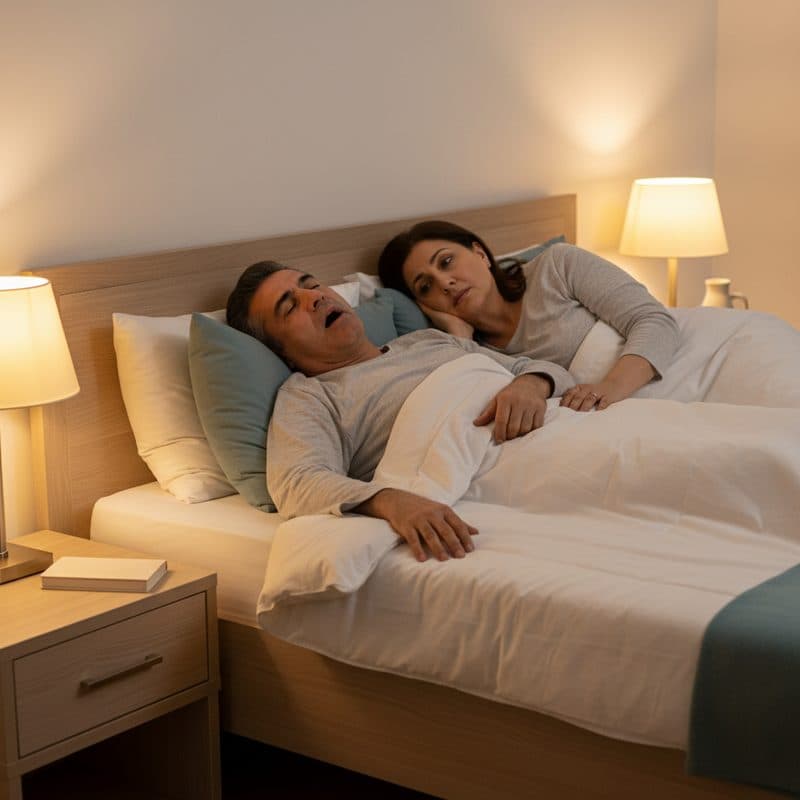
Snoring is not just night-time noise: when it comes with pauses in breathing (apnea), it affects the heart, blood pressure and daytime energy. If your family notices breathing pauses or you wake up exhausted, discuss it with an ENT doctor.
Common causes
- Narrowing of the airway during sleep — soft palate, tonsils, septum
- Excess weight
- Nasal congestion
- Alcohol and sleeping pills before bed
- Age-related loss of throat muscle tone
- Sleeping on your back
When to seek urgent help
Do not wait for a scheduled visit if you have any of these signs:
- Breathing pauses during sleep noticed by your family
- Marked daytime sleepiness — falling asleep at the wheel or at work
- Morning headaches and high blood pressure in the morning
- Waking up gasping or choking
- Snoring in a child who constantly breathes through the mouth
Ambulance: 103 (103 from a mobile) · Unified rescue service: 911
Your specialist
ENT specialist
What to bring to the visit
- Your partner's account of your sleep, or a phone recording of the snoring
- Your blood pressure readings and weight
- A list of medicines and sleeping aids
- Results of previous sleep studies, if any
Frequently asked questions
What is sleep apnea and why is it dangerous?
Sleep apnea means pauses in breathing during sleep: most often the airway narrows and closes, and the person stops breathing for a while, usually without fully waking up. These pauses raise the risk of hypertension, heart attack and stroke, and daytime sleepiness raises the risk of accidents. Apnea can be diagnosed and managed — it is worth the effort.
How can I tell if my breathing stops during sleep?
Usually your family notices it: loud snoring breaks off into silence, then you take a noisy gasp. You may wake up feeling as if you are choking and feel sleepy and worn out during the day. Ask someone to watch you sleep, or record your snoring on your phone and show the recording to an ENT doctor.
ENT or pulmonologist: who should I see about snoring?
Start with an ENT doctor, who will check your nose, tonsils and throat, where the cause of snoring is often found. If there are signs of apnea or lung disease, a pulmonologist may join in. Whether a clinic offers a sleep study, check by phoning the clinic.
How is snoring evaluated?
An ENT doctor examines the nose and throat; a sleep study may follow. Based on the results, the plan may include treating the nose, losing weight or using breathing support devices.
Snoring in women: which doctor?
The path is the same as for men: start with an ENT doctor. Mention not only the snoring but also daytime tiredness, morning headaches and changes in weight — this helps tell whether apnea is involved.
My child snores and breathes through the mouth: who should we see?
Start with a pediatrician or a pediatric ENT doctor: a common cause is enlarged tonsils and adenoids. Do not put off the visit if the child snores every night or goes quiet in sleep and then gasps.
More in “Ear, nose, throat”
- Sore throat
ENT specialist
- Ear pain
ENT specialist
- Nasal congestion
ENT specialist
The information on this page is for reference only and does not replace a doctor's consultation. Only a doctor can make a diagnosis in person. If your condition worsens, call 103.