
Chest pain: causes, when to call 103 and which doctor to see
Chest pain should never be ignored, but there is no need to panic either: more often the cause is muscles, the spine or digestion, not the heart. A cardiologist or general practitioner will sort it out in person, with an examination and an ECG.
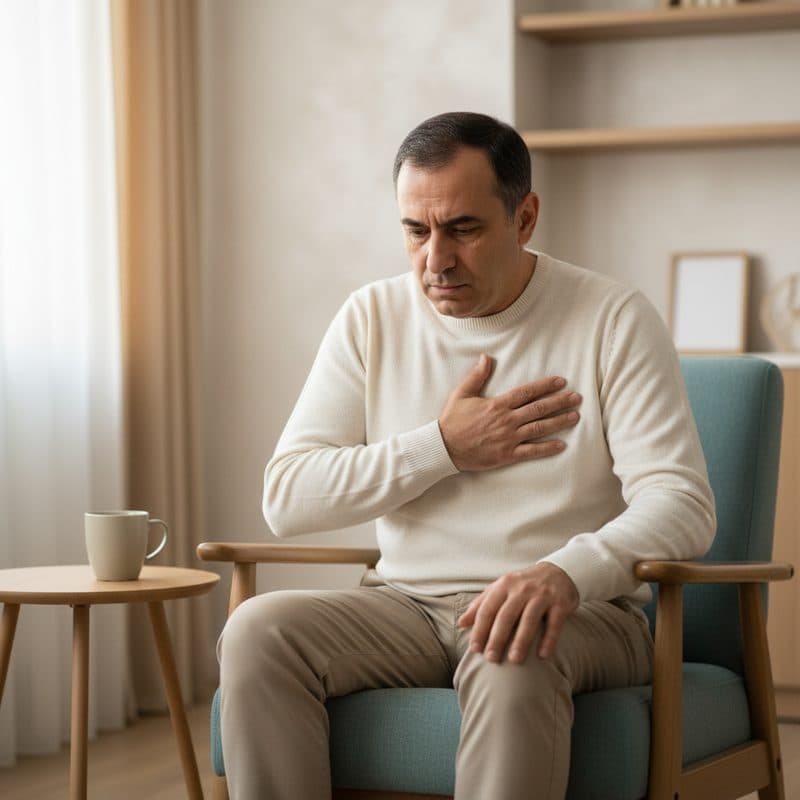
Common causes
- Muscle strain after exertion or an awkward movement
- Intercostal neuralgia and problems of the thoracic spine
- Heartburn and acid reflux
- Anxiety and panic attacks
- Heart and vessel disease (for example, angina) — less common, but the first thing to rule out
When to seek urgent help
Do not wait for a scheduled visit if you have any of these signs:
- Pressing or burning pain behind the breastbone lasting more than 5–10 minutes — call 103 immediately
- Pain spreading to the left arm, jaw or back
- Pain with shortness of breath, cold sweat, nausea
- Pain with a racing or irregular heartbeat, dizziness
- Sudden sharp pain with difficulty breathing
Ambulance: 103 (103 from a mobile) · Unified rescue service: 911
Your specialist
Cardiologist
What to bring to the visit
- Old ECGs and heart test results — they make comparison easy
- A list of medicines you take
- Blood pressure and pulse readings for recent days, if you have them
- A description of the pain: when it appears — on exertion, at rest, on movement
Frequently asked questions
How can I tell whether it is my heart or my muscles?
You cannot reliably tell by the feeling alone: the heart is checked by a doctor, with an examination, an ECG and other tests if needed. Be alert to pressing or burning pain behind the breastbone, especially on exertion. If it lasts more than 5–10 minutes, spreads to the left arm, jaw or back, or comes with shortness of breath, cold sweat or nausea, call 103 right away.
It hurts when I press on it or twist my torso — is it the heart?
Pain that depends on movement and pressure is more often muscular or spinal. But do not rule out the heart on your own: get an ECG and see a doctor.
What is angina and which doctor treats it?
Angina is pain or a feeling of pressure behind the breastbone caused by reduced blood flow to the heart; attacks are usually triggered by exertion or stress and settle within a few minutes of rest. It is managed by a cardiologist; if attacks become more frequent, last longer or come on at rest, seek urgent help rather than waiting for a routine appointment. If the pain does not settle within 5–10 minutes or comes with shortness of breath or cold sweat, call 103 right away.
Cardiologist or general practitioner?
If the pain comes with exertion, you have shortness of breath or you are over 40, start with a cardiologist. Otherwise a general practitioner is fine: they will examine you and refer you if needed.
Left-sided chest pain in a woman: who should she see?
If the breast itself hurts or you can feel a lump in it, see a gynecologist or a breast specialist (mammologist). For pain in the chest itself, the general rules on this page apply: with any sign from the “When to seek urgent help” list, call 103; otherwise see a general practitioner or a cardiologist.
More in “Chest and heart”
- High blood pressure
Cardiologist
- Persistent cough
Pulmonologist
The information on this page is for reference only and does not replace a doctor's consultation. Only a doctor can make a diagnosis in person. If your condition worsens, call 103.