
Food poisoning and other poisoning: symptoms, when to call 103, which doctor
You can be poisoned by food, medicines, alcohol, household chemicals, mushrooms or carbon monoxide. Mild food poisoning usually clears up within a week; if it drags on, start with a general practitioner, or a pediatrician for a child. If someone may have swallowed a medicine, a chemical or poisonous mushrooms, or breathed in gas, call 103 at once, even if they feel fine for now.
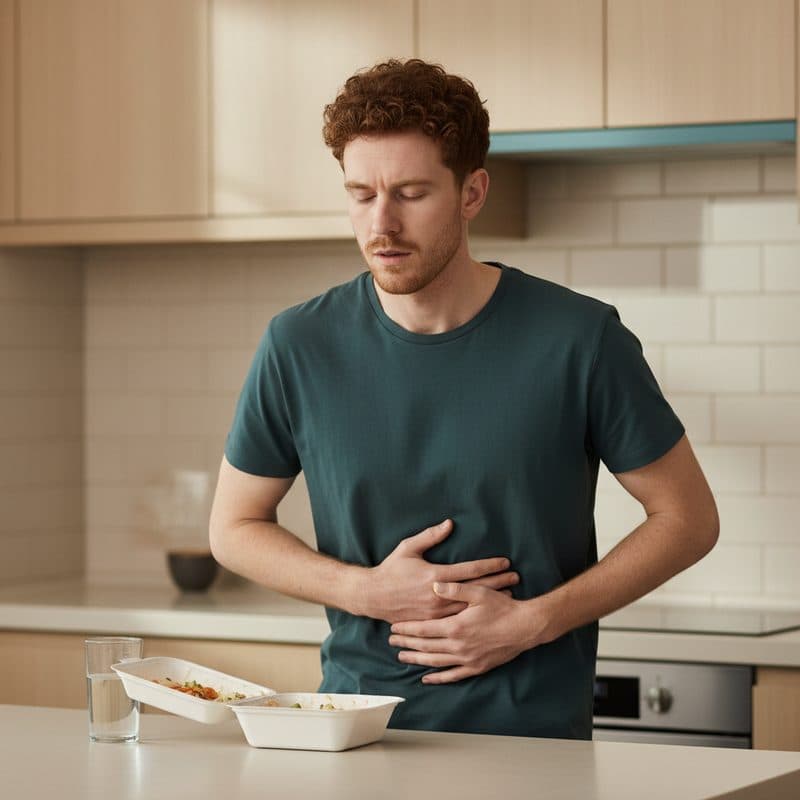
Common causes
- Food that was undercooked, stored badly or left out in the warm for too long
- Bacteria and viruses in food and on hands: salmonella, campylobacter, E. coli, norovirus
- Gut infections such as rotavirus: they look like poisoning but spread from person to person
- Medicines: an overdose or taking them by accident, especially children
- Large amounts of alcohol, household chemicals, pesticides, poisonous mushrooms and plants
- Carbon monoxide from gas cookers, heaters, boilers and stoves
When to seek urgent help
Do not wait for a scheduled visit if you have any of these signs:
- The person is unconscious, cannot be woken, is struggling to breathe or is having a seizure — call 103
- Someone has swallowed a medicine, a household chemical or poisonous mushrooms — call 103, even if they seem fine for now
- Vomiting blood or something that looks like coffee grounds, sudden severe stomach pain or confusion — call 103
- Double vision, drooping eyelids, difficulty swallowing or speaking, especially after home-canned food — call 103: these are signs of botulism
- You feel unwell in a room with a gas appliance, with headache, dizziness, nausea or weakness — get outside and call 103
- Vomiting that will not stop so you cannot keep water down, blood in the stool, hardly any urine; vomiting for more than 2 days or diarrhea for more than 7 days
- Vomiting and diarrhea in a baby under one year old, a pregnant woman or an older person
Ambulance: 103 (103 from a mobile) · Unified rescue service: 911
Your specialist
General practitioner
What to bring to the visit
- The packaging, label or leftovers of whatever may have caused the poisoning: show them to the doctor or the 103 crew
- What you ate and drank in the last 2–3 days and when the symptoms started
- How many times you vomited or had diarrhea, your temperature, and when you last passed urine
- Whether anyone else who ate the same food is ill
- A list of medicines you take
Frequently asked questions
What are the symptoms of food poisoning, and when do they start?
Usually nausea, vomiting, diarrhea, stomach pain, a high temperature and feeling generally unwell. They start a few hours or days after eating, less often a few weeks later, and usually clear up within a week. If you cannot keep fluids down, there is blood in your stool or vomiting lasts more than 2 days, do not wait: these are signs from the “When to seek urgent help” list.
What should I do for poisoning before the doctors arrive?
If the poison is a medicine, a chemical, mushrooms or gas, call 103. Do not make the person vomit and do not give them anything to eat or drink. Find the packaging or what is left of the substance and give it to the doctors. If the person is unconscious but breathing, lay them on their side and keep checking their breathing. With mild food poisoning, the main thing is to drink water in small sips; ask a doctor or pharmacist which medicines are suitable.
Food poisoning or rotavirus: how can I tell, and which doctor should I see?
Symptoms alone make it hard to tell: both cause vomiting, diarrhea, stomach pain and fever. A virus is more likely if people fall ill one after another in a family or nursery; rotavirus is most common in young children. A doctor can tell for sure. Adults should see a general practitioner or infectious disease specialist, and children a pediatrician. The main danger in both cases is dehydration: if someone cannot drink and is hardly passing urine, call 103.
Which doctor should I see for poisoning?
For food poisoning that does not go away, see a general practitioner, or a pediatrician for a child. If it looks like a gut infection or the symptoms drag on, an infectious disease specialist can help. Severe poisoning with medicines, chemicals, gas or mushrooms is treated in hospitals, where toxicologists work, so in such cases call 103 straight away.
My child swallowed a medicine or household chemical. What should I do?
Call 103 at once, even if your child looks well: symptoms can appear hours later. Do not make them vomit and do not give them anything to eat or drink. Take the packaging with you or hand it to the crew: the doctors need to know exactly what was swallowed and how much.
How can I tell if it is carbon monoxide, and what should I do?
Signs include headache, dizziness, nausea, weakness, confusion and shortness of breath. They get worse indoors and ease when you go outside. Turn off the gas appliance if you can, get everyone into fresh air and call 103, then report the fault to the gas service on 104. Do not go back inside until the doctors or the gas service say it is safe.
More in “Abdomen and digestion”
- Abdominal pain
Gastroenterologist
- Heartburn
Gastroenterologist
- Constipation or diarrhea in adults
Gastroenterologist
The information on this page is for reference only and does not replace a doctor's consultation. Only a doctor can make a diagnosis in person. If your condition worsens, call 103.