
Eye pain, pink eye, styes and vision problems: when to see an ophthalmologist
An eye can hurt because of fatigue, dryness or inflammation — but sudden pain or a sharp drop in vision needs an urgent ophthalmologist visit. With eyesight the rule is simple: better safe than sorry.
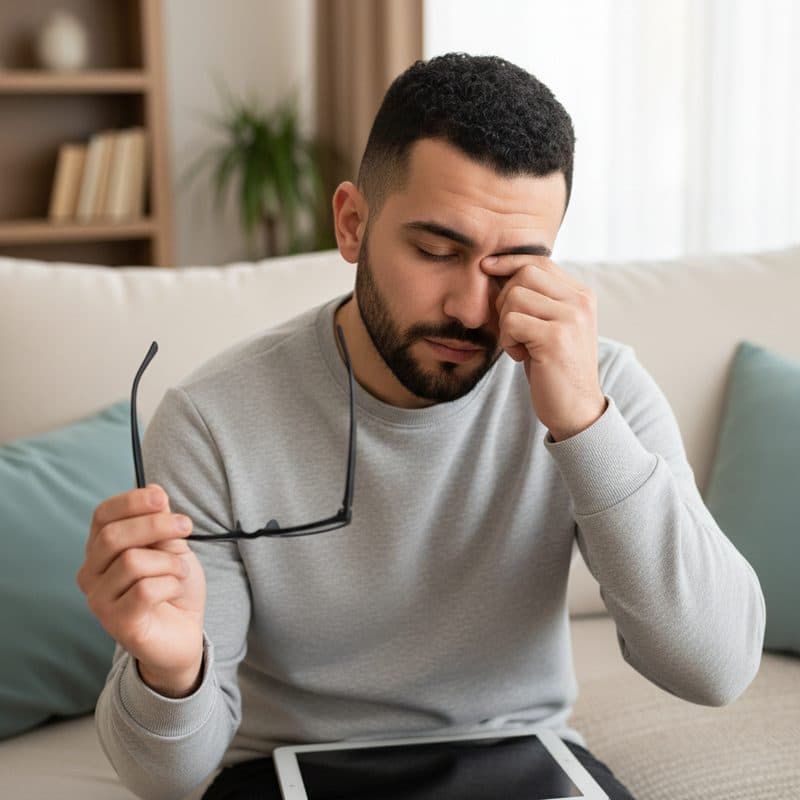
Common causes
- Eye strain and dryness from screen work
- Conjunctivitis (pink eye) — inflammation of the eye's lining
- A stye and eyelid inflammation
- A foreign object in the eye
- Age-related vision changes
- Poorly fitted glasses or contact lenses
When to seek urgent help
Do not wait for a scheduled visit if you have any of these signs:
- Sudden loss or sharp worsening of vision — see a doctor urgently or call 103
- Severe eye pain with nausea and halos around lights
- An eye injury or chemical burn — rinse with water and seek help urgently
- A "curtain" over the vision, flashes, a shower of new floaters
- Eye pain with fever and eyelid swelling
- Double vision
Ambulance: 103 (103 from a mobile) · Unified rescue service: 911
Your specialist
Ophthalmologist
What to bring to the visit
- The glasses or lenses you use
- Details of your last eye exam
- A list of medicines, including eye drops
- Information about diabetes and hypertension, if you have them
Frequently asked questions
Conjunctivitis (pink eye): when do I need an ophthalmologist?
Redness, a gritty or burning feeling, watering and discharge are common with conjunctivitis, and a mild case may clear up on its own. See an ophthalmologist if it is not easing after a few days or if you wear contact lenses, and get urgent help if there is severe pain, light hurts your eye or your vision gets worse. It is better not to choose eye drops yourself without a doctor.
A stye or a swollen eyelid: when should I see an ophthalmologist?
A stye is a painful lump on the edge of the eyelid; it often clears up on its own within one to two weeks, and it should not be squeezed. See an ophthalmologist if it does not go away or keeps coming back, and get urgent help if swelling and redness spread across the eyelid and around the eye, or if you get a fever or your vision gets worse.
Pink eye in a child: pediatrician or ophthalmologist?
Start with a pediatrician, who will examine the child and refer them to a pediatric ophthalmologist if needed. Get urgent help if a baby in the first four weeks of life has red or sticky eyes, or if the child has severe pain, cannot see as well as before, or has swollen eyelids with a fever.
What should I do if I injure my eye?
Go to the nearest clinic with an ophthalmologist or call 103. For a chemical burn, immediately rinse the eye with clean water for 15–20 minutes — that matters most.
Raised eye pressure: what are the signs and who checks it?
Raised eye pressure may cause no symptoms for a long time, so an ophthalmologist measures it during an eye exam. Ask the doctor how often you should be checked: it depends on your age, glaucoma in the family and other conditions such as diabetes. Sudden severe eye pain with nausea and halos around lights can be an acute glaucoma attack — see a doctor urgently or call 103.
My eyes get tired at the computer — is that dangerous?
Eye strain is usually harmless, but a check-up every year or two helps catch real problems early. The doctor will also advise on lubrication and screen habits.
The information on this page is for reference only and does not replace a doctor's consultation. Only a doctor can make a diagnosis in person. If your condition worsens, call 103.